Fifteen years ago, the Tennessee Legislature passed the Tennessee Civil Justice Act of 2011 and the bill was signed by then Governor Bill Haslam. Commonly referred to as “tort reform” because it allegedly fixed abuses in the civil justice system, it could be called the “Wrongdoer Protection Act” because of the protection it provides to individuals and corporations that cause harm to others. Regardless of how you feel about the Tennessee Civil Justice Act of 2011, most reasonable people would say that the value of a dollar has dramatically changed in 15 years. Yet, the monetary limits contained within the Act have not increased at all. Understandably, most Tennesseans do not have any idea of the Act’s impact unless or until they or a loved one has been seriously injured. So, let’s examine what the Tennessee Civil Justice Act also known as tort reform did to the rights of injury victims and their families. Continue reading

Articles Posted in Litigation Process
Warning: Using AI Could Hurt Your Legal Case
AI presents a new legal threat and people involved in litigation or who are contemplating litigation need to be aware of it. You may have already heard about situations in which lawyers relied too heavily on AI and got in trouble with the court. If not, just Google “lawyer who used AI to write brief”, and you can read case after case in state after state where lawyers have been sanctioned by courts for using AI to write their briefs. While there is not a general prohibition on lawyers using AI, there are strict prohibitions about lawyers citing non-existent cases, erroneously quoting previous case law, etc. In the cases of the sanctioned lawyers, AI “hallucinated” and gave the lawyers incorrect information and the lawyers did not double check its accuracy before submitting it to the Court. Now, there is a new danger, and it is with clients asking AI legal questions either before or during the litigation. Continue reading
It’s A Moo Point

In today’s post, we thought we would go over some commonly misunderstood legal terms. The idea developed after re-watching the series Friends with our teenage daughter. In Season 7, Episode 8, Joey misunderstands the term “moot” when discussing Rachel’s assistant and instead uses “moo” to great comedic effect. Like many professions and jobs, the law uses some terms that don’t arise in everyday conversation so here are some of the terms most commonly Googled by Americans along with our explanations as to their meanings. Continue reading
Well, Hello There!
It has been a long time since this there has been a post on this blog. Some might actually say we have been negligent. So, we thought we would use our return to discuss the law of negligence, especially since negligence is at the heart of injury and wrongful death law. Negligence is comprised of three things: breach of duty, causation and damages. It sounds easy enough, but these concepts are the stuff of nightmares for first year law students in a tort class. Let’s get to it. Continue reading
Can I Use an AI Tool to Help Me Represent Myself For an Injury Claim Arising From a Car Accident?
The short answer is “Yes”. You absolutely can use an AI tool to help you handle your claim yourself. But the better question is this: Should you use an AI tool to handle your own personal injury claim? We believe the answer to that question is “No.” Allow us to explain. Continue reading
The Rule of Law: Why Should You Care?
The Rule of Law is critical to democracy. At its core, it means that everyone must follow and obey the law regardless of how much money you have, regardless of what position you hold and regardless of who you know. By adhering to the Rule of Law, we essentially agree that everyone is going to play by the same rules. The Rule of Law affects our lives every single day. It affects our rights; it affects our economy, and it affects our trust in our government. As lawyers, we are deeply committed to the rule of law and judicial independence and here are some reasons why you should be committed to those things as well: Continue reading
I Was Injured in an Accident and My Doctor Made It Worse. Who is Responsible?
This happens more than you might expect. Each year, there are over 57 million medical office visits, and 40 million emergency room visits related to injuries. A tremendous amount of malpractice happens during those visits. According to John Hopkins, 795,000 patients each year will suffer serious harm from a misdiagnosis alone. Medication errors and health care-associated infections are also leading causes of harm to patients. Roughly, 250,000 patients will die from medical errors. So, what happens when you get injured by a vicious dog or injured in a car wreck, and then a medical professional makes a mistake that makes it worse? Continue reading
Car Accidents and Admissible Evidence
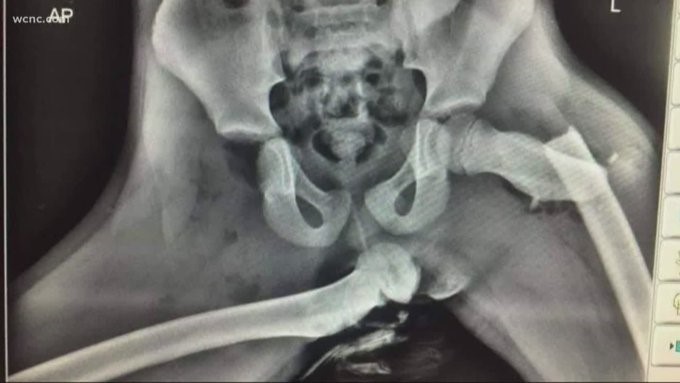
This image shows what happens if you are involved in a car accident and your front airbag deploys with your feet on the dash. Ouch! The result is ugly: two femoral hip fractures which are serious and painful and will require surgery to repair followed by a 4 to 6 month recovery period. The owner’s manual of every vehicle with airbags warns of this danger. Assuming the accident was the fault of someone else, can you still recover compensation for your injuries in such an accident if you failed to heed the airbag warnings and that failure caused your injuries in the accident to be worse? Continue reading
A Crash Course for Gen Z and Parents of Adult Gen Z
Let’s start with who is officially Gen Z. Individuals born between 1997 and 2012 are considered Gen Z. The adult members of Gen Z range from 18 years old to 27 years old. .
As these Gen Z adults leave the nest (hopefully) and make their way into the world, they need to understand terms like “deductible”, but only 27% of them do. Specifically, as to auto insurance, 22% of Gen Z adults have “little or no awareness” of the importance of auto insurance”. This is especially frightening because this age group also happens to be the most likely to be in an auto accident. Read on for one of the most important auto insurance tips for everyone, not just Gen Z. Continue reading
Would You Settle for Less?

Part of our job is to attempt to keep up with what our opponents (the insurance industry and their lawyers) are thinking and doing. One of the many ways we try to do that is by reading insurance industry publications such as Claims Journal. In a recent Claims Journal article, the author interviewed Harish Kapur, CEO of Across America Insurance Services. Mr. Kapur’s comments are nothing new to us, but they are a good reminder to anyone who is considering filing a personal injury or wrongful death claim. Here are three key take-aways:
- The insurance companies handle injury claims all day-every day, while this is hopefully your one and only injury claim.
Mr. Kapur bragged about his “crack team of in-house adjusters” and how they “have to know everything about the file.” The insurance adjusters know what information is critical. They know how to ask questions and frame the narrative during a recorded statement. They are trained how to interview witnesses and scour the internet for information on you.
Tennessee Injury Law Center